Prepared to Respond
A Librarian's Guide to Book Challenges and Censorship
 |
Course Details Registration deadline: November 6, 2026 (Fall) or April 1, 2027 (Spring)
 4 Self-Paced Course Modules
 16 Credit Hours
 Recommended for school and public librarians.
 $299 | Save with group rates.
DO YOU WONDER HOW TO INCLUDE A WIDE RANGE OF MATERIALS WHILE STAYING OFF OF PEOPLE'S RADARS?
This course gives you the policies, language, and skills to face book challenges and censorship pressure with clarity and confidence without sacrificing a wide range of materials. ABOUT THIS COURSELearn tangible ways to handle censorship, find allies, and ensure your library policies are up to date. Self-Paced Course Materials Book challenges are no longer rare, and most libraries are not as prepared as they need to be. Policies may exist, but they are often outdated, unclear, or untested under real pressure. Staff are left to respond in the moment without consistent guidance, and leadership is forced to react instead of act proactively. This course focuses on what it actually takes to be ready. You’ll learn how to strengthen your policies, equip staff with clear language and procedures, and build strategies that help you maintain a wide-ranging collection while reducing unnecessary risk. You’ll also explore how to respond when challenges happen, from initial conversations to formal processes, so you’re not figuring it out in real time. This is a fully self-paced course, so you just need to register by the deadline. Once the materials unlock, you can start when you’re ready and move through the course on your own schedule within the access period. For more details, check out the What to Expect tab. Need an invoice or PO? Orders of $600 or more can be completed online using the invoice option at checkout. For orders under $600, please do not check out online. Submit this form, and we’ll process your registration manually. Need approval? Email this course to your supervisor. TRAINING A TEAM?Make sure your staff respond to challenges consistently, with clear language, shared policies, and confidence under pressure. Multi-seat discounts are automatically calculated in the cart. Return to Full Course Catalog AFTER COMPLETING THIS COURSE, YOU'LL BE ABLE TO:
You will leave with concrete tools, updated policies, and a clearer sense of how to protect your collection and your community without waiting for a crisis to force your hand. This course is especially helpful for:
If that sounds like your role, you will probably see yourself in this course.
If you are someone who:
This course was built for you.
THIS COURSE CONSISTS OF 5 ON-DEMAND MODULES:Introduction Module: Sharing Context: Where We Are in 2026 and Beyond What has changed since censorship peaked a few years ago? What have we learned, and what are the new challenges we face in 2026 and beyond? This introduction module will cover where we've been and where we're going, and how we can support each other in supporting our communities.
Module 1: Proactive Responses: Building Policies and Allies Are your intellectual freedom policies updated and working for you? And how can you find community support and allies to help advocate for intellectual freedom? This module will teach you how to ensure your policies and procedures are effective, as well as how to find allies inside and outside of your library, gain local legislative support, and work as a community to combat censorship challenges.
Module 2: Protest Ready: How to Respond to Challenges Is your library prepared for censorship-based protests and active challenges or disruptions? What separates a calm, policy-driven response from a chaotic, reactive one? This module walks through practical strategies for responding to book and material challenges, from de-escalation in the moment to documentation and follow-through. Leave with a response framework and communication tools you can put in place before your library needs them.
Module 3: Staying Off the Radar: How to Increase Inclusivity Despite Censorship How can you continue to create and advocate for inclusive programs and collections even and especially when your organization is facing censorship? How can you stay off the radar and still support your vulnerable communities? This module will cover real examples from states that have faced censorship directly.
Module 4: Protecting Yourself Amid Censorship and Defamation Attacks Too often, librarians and educators are being publicly targeted by people attempting to advance censorship. This module will teach you how to protect yourself online from doxxing and other harassment. You will also learn strategies for setting and maintaining boundaries, advocating for yourself in the workplace, and prioritizing wellness through rest and connection to others through affinity groups. COURSE INSTRUCTORS
Sonya Durney, Scholarly Communication Librarian, University of New England
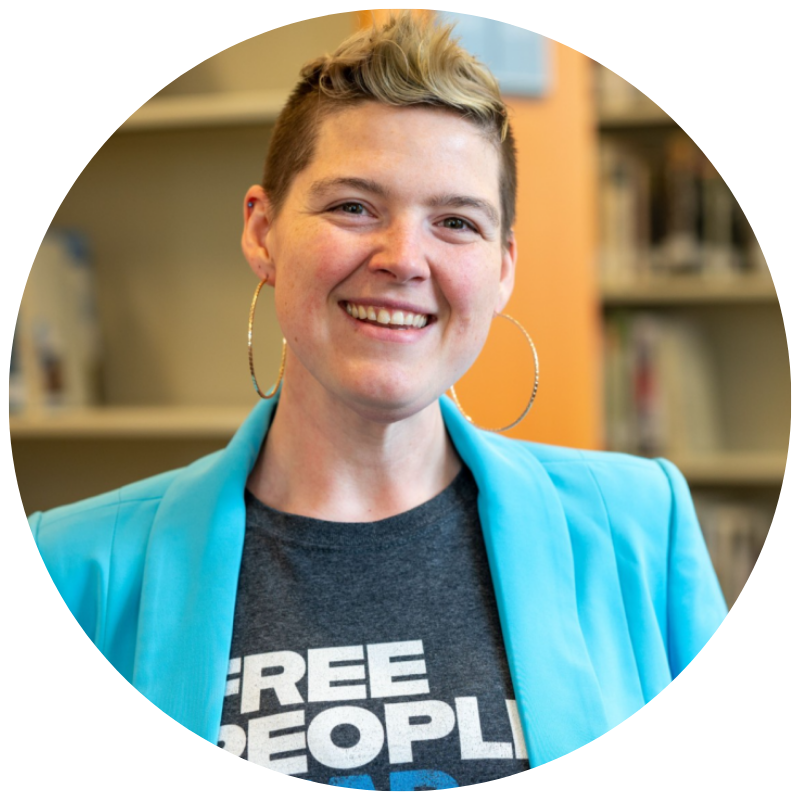
Sam Helmick, They/Them, Community & Access Services Coordinator at Iowa City Public Library
Helmick served as President of the American Library Association from 2025–2026. Their leadership has included navigating increasingly complex challenges around intellectual freedom, censorship, public discourse, and the role of libraries as trusted civic institutions. A frequent speaker and writer on the future of libraries, Helmick brings a practical, people-centered perspective to difficult situations by grounding responses in policy, preparation, de-escalation, documentation, and the conviction that library workers should not have to improvise their way through a crisis. They hold a Master of Library and Information Science from the University of Illinois.
Julie Miller, Library Manager, Florida State College at Jacksonville
Amanda Jones, Librarian and Author
ALL THE DETAILSBook challenges don’t usually start as formal processes. They start with a conversation, a complaint, or a moment where a staff member has to respond without much time to think. What happens in those early moments often shapes everything that comes next. This course focuses on helping you feel more prepared in those moments and beyond. You’ll look at what actually holds up when policies are tested, how to give staff clearer guidance so responses are consistent, and how to approach challenges in a way that protects both your collection and your team. You’ll also explore how to build support ahead of time, so you’re not trying to figure everything out once a situation is already underway.
|