Sharp Minds, Skeptical Eyes
News Literacy Instruction in the Age of AI for High School and Early College
 |
Course Details July 15, 2026 | 1:00 - 4:00 PM ET
 3-Hour Live Online Session
 3 Credit Hours
 Recommended for high school and early college librarians.
 $135 (Save with early bird and group rates!)
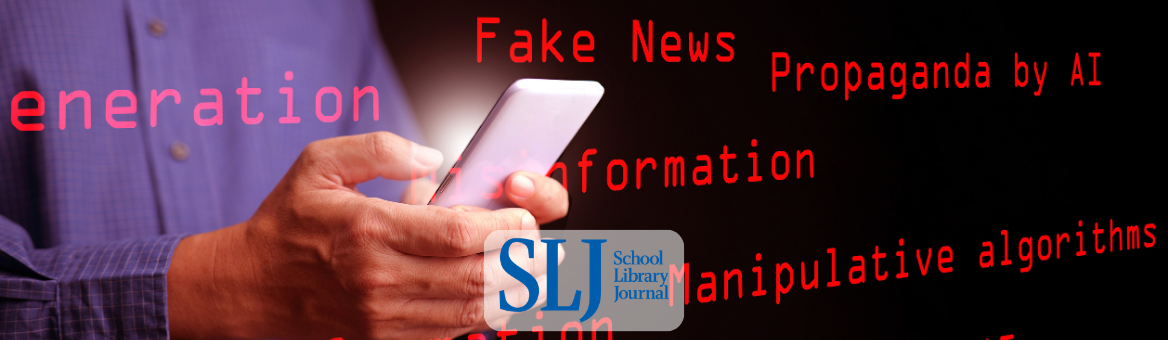
Teaching news literacy used to feel hard. Now it feels like the ground keeps moving. This course gives you a stronger framework for helping students evaluate news and AI-generated content without losing clarity or credibility.
INFORMATION LITERACY IS GETTING HARDER TO TEACH.
This course gives you a clear, classroom-ready way to teach news literacy in a landscape where the rules keep changing. Early bird rate is $102 through June 15, 2026. Standard rate is $135 through July 15, 2026. Need flexibility? If you can’t attend live, you’ll get access to the recording for 6 months.
Invoice or PO options: Orders of $600 or greater can choose invoice at checkout. For orders under $600, please do not check out online. Submit this form, and we will process your order manually. Need approval? Email this course to your supervisor. TRAINING A TEAM?Train librarians, instructional partners, and department leads together so students hear the same core messages about credibility, verification, and AI-generated content across classes and research support. Multi-seat discounts are automatically calculated in the cart. Return to Full Course Catalog AFTER COMPLETING THIS COURSE, YOU'LL BE ABLE TO:
If you are someone who:
This course was built for you.
This course is especially helpful for:
If you are helping students make sense of information in a fast-changing digital landscape, you will see yourself in this course.
Session 1 | 1:00 - 1:15 pm ETFraming the Challenge The information landscape in the age of AI is evolving quickly, and along with it, the feeling that misinformation is more abundant than ever. This introductory session will frame the challenge and start a conversation about the use of news literacy skills to evaluate, verify, and inform judgment. Session 2 | 1:15 - 1:30 pm ET News Literacy as Cross-Disciplinary Work News literacy skills are connected to core skills already taught in schools, colleges, and universities. This session will uncover existing opportunities to partner with classroom teachers and faculty to integrate news literacy across content areas. Session 3 | 1:30 - 2:05 pm ET Mini Verification Lab #1: Investigating Visual Claims This session is an opportunity to practice verification skills that you can teach your students. Through an interactive activity, you’ll apply principles from the New Literacy Project to identify claims, trace the original context of the claims, and evaluate evidence. Break | 2:05 - 2:15 pm ET
Session 4 | 2:15 - 2:40 pm ET Mini Verification Lab #2: Lateral Reading & Source Investigation In the second interactive activity, you will practice effective verification through lateral reading techniques. You’ll leave this session with a realistic lesson plan idea you can add to your teaching toolbox. Session 5 | 2:40 - 3:00 pm ET Mini Verification Lab #3: Evaluating Claims & Statistics In the final activity, you’ll explore skills that can be applied to information sources that lack context, nuance, or transparency. The learnings from this activity will prepare you to teach students about such things as context and representation when evaluating sources. Break | 3:00 - 3:10 pm ET
Session 6 | 3:10 - 3:30 pm ET AI and the Future of Verification Verification is more challenging with the proliferation of AI-generated content. This session will cover types of content found in common information channels, how algorithms shape visibility and engagement, and thoughtful ways to approach conversations about AI and misinformation. Session 7 | 3:30 - 3:50 pm ET Instructional Strategies & Practical Application The last session of the day will focus on practical instructional approaches. Through modeling, structured activities, and integrating verification into everyday instruction, you can create learning opportunities across grade levels and subject areas. Reflection and Closing | 3:50 - 4:00 pm ET COURSE INSTRUCTOR
Cathy Collins, Ed.D., Library Media Specialist
WHO SHOULD TAKE THIS COURSEThis course is designed for high school and early college academic librarians, school librarians, and educators who teach research, information literacy, media literacy, or critical evaluation of sources. SESSIONS AND PRICINGEarly bird pricing ends one month before the session deadline.
GROUP OPTIONSTraining a team? Choose the setup that matches how you want to plan and pay: Group course enrollment: Enroll 3+ staff in this course and save. Bulk course credits: Prepay once, get the highest per-seat discount on every course, and assign seats later. Unlimited annual licensing: System-wide access for a year with no per-course approvals. Request Discounted Group Pricing Questions? Email groupsales@libraryjournal.com. COURSE FORMATThis will be a live 3-hour course and will include: Live session: A 3-hour live session focused on practical, classroom-ready approaches to teaching news literacy in the age of AI. Facilitated discussion: Audience participation in Q&A and discussion during the live session. Online classroom: The virtual learning platform holds all course content and remains accessible for six months after the course date.
EXPECTED TIME COMMITMENTIf you attend or watch the recording of the live session, you will spend approximately 3 hours on this course. You will earn 3 hours of professional development credit and a School Library Journal certificate of completion.
ALL THE DETAILSBuild your capacity to teach news literacy with confidence, credibility, and a framework designed for the realities of today's information environment. Helping students think critically about the news has always been important library work. In the age of AI-generated content, it's urgent. This three-hour live session is built around the News Literacy Project's seven standards and explores how those foundational concepts apply directly to the AI-generated content your students are already encountering and too often trusting. You'll develop practical, classroom-ready approaches to news literacy instruction and explore how to collaborate with teachers to integrate those approaches across disciplines. You'll also examine strategies for news literacy advocacy that are grounded, credible, and deliberately non-partisan, so you can navigate the information landscape with your students.
ON-DEMAND ACCESSAll live sessions are recorded and available on demand for six months following the initial broadcast as part of your purchase.
CERTIFICATE OF COMPLETIONComplete all course requirements to earn 3 professional development credit hours and a School Library Journal certificate of completion. Certificates are emailed upon completion.
ACCESSIBILITYAll video recordings feature auto-captioning. If you require accommodations, please email course-support@libraryjournal.com upon registration and we will make our best efforts to support your needs.
SUPPORTFor technical or course-related support, please contact course-support@libraryjournal.com. |