AI and Academic Libraries
An Online Conference
 |
Course Details Live online conference November 16-17, 12:00 pm - 4:30 pm ET
 2-Day Live Online Conference
 10 Credit Hours
 Recommended for academic librarians.
 $282 | Save with early bird and group rates.
ABOUT THIS CONFERENCEA practical, honest look at how AI is actually showing up in academic libraries right now. Live Online Conference: Last year, Library Journal hosted its first annual AI and Academic Libraries Online Conference. We hope you will join us again as we continue this critical conversation. AI is reshaping academic libraries at every level—from discovery systems to collection development to instruction. Libraries that have implemented AI tools are now gaining real-world insights about what works, what falls short, and how to adjust course as the technology changes. These presentations will share experiences, lessons learned, and practical guidance for peers navigating similar decisions. All presentations will take place via Zoom on Monday, November 16 and Tuesday, November 17, 2026 and will be recorded for accessibility. Recordings will be available to conference participants, but they will not be downloadable or available publicly.
Library Journal is awarding 15 scholarships to the AI and Academic Libraries Online Conference thanks to generous support from EBSCO. Please click here to apply; the submission deadline October 16th, and applicants will be notified of their status by October 19th. Early bird rate is $232 through October 16, 2026. Standard rate is $282 through November 16, 2026. Invoice or PO options: Orders of $600 or greater can choose invoice at checkout. For orders under $600, please do not check out online. Submit this form, and we will process your order manually. Need approval? Email this conference to your supervisor BRING YOUR TEAMWhen multiple staff attend, your team can compare approaches, evaluate tools together, and make more informed decisions about how AI should (or shouldn’t) be used across your library. Multi-seat discounts are automatically calculated in the cart. Return to Full Course Catalog This conference is especially useful for:
If that sounds like your role, you will likely recognize a lot of what’s discussed here.
You’ll get the most out of this conference if you:
This conference was built for that exact moment you’re in right now. Opening Keynote: Ashleigh Faith, Director of AI and Semantic Innovation and Strategy, EBSCO Information Services
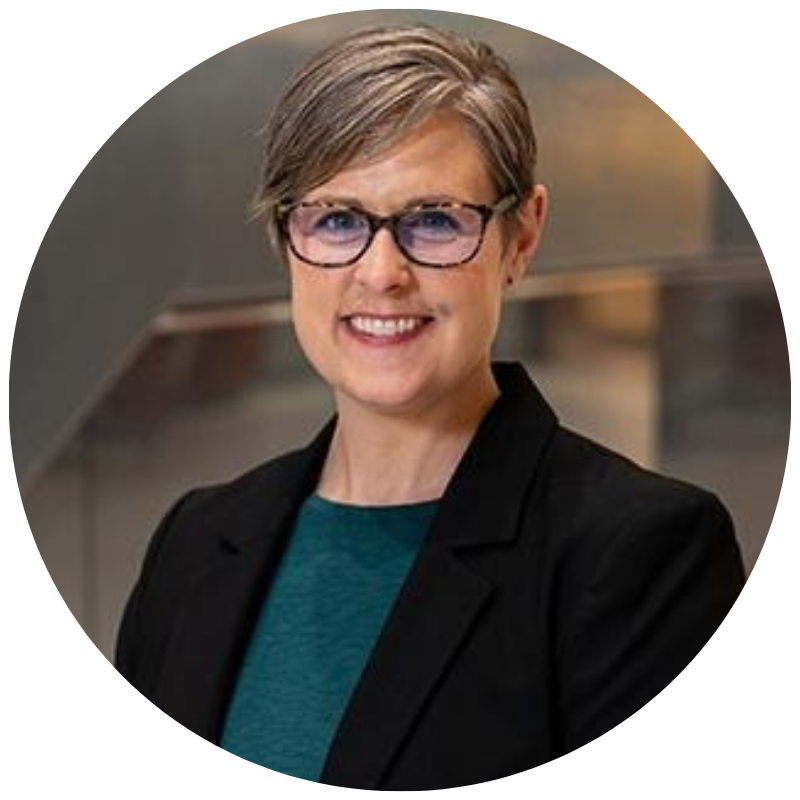
Closing Keynote: Sarah Zipf, Ph.D, Assistant Professor of Medicine, University of Pittsburgh
DAY 1 — Monday, November 16, 2026Welcome, Housekeeping | 12:00–12:05 pm ET
Opening Keynote (Main Stage) | 12:05–1:00 pm ET Trust in the Age of Uncertainty: Why Librarians Are the Antidote to AI Misinformation Speaker: Ashleigh Faith — Director of AI and Semantic Innovation and Strategy, EBSCO Information Services
Break | 1:00–1:10 pm ET Concurrent Sessions | 1:10–2:10 pm ET
Session 1 (Main Stage) Lovable Library Apps to Enhance Library Instruction and Improve Workflows Speakers: Olivia Peltier, Tiffany Ellis, Jennifer Hamilton — Edith Garland Dupré Library, University of Louisiana at Lafayette
Session 2 (Stage B) — Using AI to Build and Evaluate Collections AI-Assisted Diversity Auditing in an Academic Library Collection Speaker: Claire Drolet — Delaware Valley University
AI for Collections Assessment Speaker: Laura DeLancey — Colorado State University
Using Generative AI to Support Data-Driven Decisions in STEM Library Collections Speakers: Melanie Gainey, Chasz Griego — Carnegie Mellon University Libraries
Break | 2:10–2:20 pm ET Concurrent Sessions | 2:20–3:20 pm ET
Session 3 (Main Stage) From Navigation to Critical Engagement: Building an AI Literacy Ecosystem in an Academic Library Speakers: Ariana Baker, Adam Johnson, Samantha Duncan — Coastal Carolina University
Session 4 (Stage B) — AI Tools and Frameworks for Information Literacy Instruction Vibe Coding for Information Literacy: Using AI to Create Custom, On-The-Fly Tools to Enhance Your Instruction Speaker: Scott Kaihoi — University of St. Thomas Libraries
AI Sycophancy, Hallucinations, and Critical Algorithmic Information Literacy Speaker: Daniel DuPont — Delgado Community College
One Model, Two Audiences: Applying CARE to Async AI Literacy Modules Speakers: Brittany Davis, Kayla Davidson — Eastern Kentucky University Libraries
Break | 3:20–3:30 pm ET Concurrent Sessions | 3:30–4:30 pm ET
Session 5 (Main Stage) — Growing AI Skills Across the Library Workforce Hiring for AI: What Leaders Need to Know (and What They Often Miss) Speaker: Mona Ramonetti — Stony Brook University
AI Skeptics vs. AI Enthusiasts: Building a Learning Platform to Fill the Gap Speaker: Yulia Brusova — St. Louis Community College
Creating a Chatbot PD-to-Practice Thinking Partner Speaker: Julie Howard — Tennessee Technological University
Session 6 (Stage B) Frame, Elevate, Enable: Building a Library AI Response Speakers: Danielle Johnson, Kat Cain, Emeka Anele
DAY 2 — Tuesday, November 17, 2026Welcome, Housekeeping | 12:00–12:05 pm ET
Concurrent Sessions | 12:05–1:05 pm ET
Session 7 (Main Stage) On AI Watch: How the Academic Library Supports Literacy, Discovery, and Integrity Speakers: Rebecca Penrose, Rachelle Ehteshami, Kristine Holloway
Session 8 (Stage B) — Listening to Staff and Students in AI Adoption Prototyping at the Front Desk: How AI Rebuilt Our Student Scheduling Process Speaker: William Judd — McLeod Business Library at William & Mary
Learning Your Audience: Gathering Staff Feedback to Guide Your AI Implementation Speakers: Kirsten Clark, Lisa McGuire, Angie Ohler, Keri Youngstrand — University of Minnesota Twin Cities
On the Front Line of AI Adoption: Student Learning Assistants' Perspectives of AI Use Among Middlesex University Students Speakers: Ioana Mitea, Simbo Ajayi — Middlesex University London
Break | 1:05–1:15 pm ET Concurrent Sessions | 1:15–2:15 pm ET
Session 9 (Main Stage) — Deciding Whether, When, and How to Use AI F(AI)r Use: A Model for Guiding the Choice to Use AI Speaker: Sarah Teichman — Hudson County Community College
Assessing the Environmental Ethics of Artificial Intelligence: Applying the SDSU Ethical AI Assessment Tool in Academic Contexts Speakers: Michelle Mussuto, Sarah Tribelhorn — California State University Chico
What Does My Gut Tell Me? Rejecting Human Disempowerment in the Rollout of Artificial Intelligence in My Library Speaker: Pete McDonnell — Bemidji State University, A. C. Clark Library
Session 10 (Stage B) — AI Literacy Building Blocks Algorithms Speak: Grounding AI Literacy in Ethical Information Literacy Practices Speakers: Kay Coates, Vivan Bynoe — Georgia Southern University
No Magic, Just Math: Teaching LLM Basics for True AI Literacy Speaker: Kara Schleck — College of Saint Benedict and Saint John's University
From Guidelines to Practice: Rebuilding an Information Literacy Curriculum for the AI Era Speaker: Sibongiseni Mrwashu — University of Fort Hare
Break | 2:15–2:25 pm ET Concurrent Sessions | 2:25–3:25 pm ET
Session 11 (Main Stage) — New Models for AI Literacy Instruction Hidden Labor: Teaching AI Infrastructure as Information Literacy Speaker: Alexis Pavenick — California State University, Long Beach
Beyond the Prompt: Teaching AI Literacy Through Metaliteracy and the Gravitational Model Speaker: Julie Durci — Gannon University Nash Library
Structuring a Scaffolded AI Literacy Framework for Diverse Student Needs Speaker: Jen Pesek — Santa Clara University
Session 12 (Stage B) — Optimizing Library Content and Tools for the AI Era Is Your Library Readable? Optimizing Webpages for AI Consumption Speaker: Evan Fruehauf — University of South Florida Libraries
AI for Inclusion: Making Accessibility a Reality Speakers: John Gage, Melissa Emo — Emporia State University
Applied Information Literacy: Sourcer AI Browser Extension and Online Source Evaluation Speakers: David Dettman, Alex Suscha — University of Wisconsin – Stevens Point
Break | 3:25–3:35 pm ET Closing Keynote (Main Stage) | 3:35–4:25 pm ET The Price of Productivity: Rethinking Technology's Human Cost in Academic Libraries Speaker: Sarah Zipf, Ph.D — Assistant Professor of Medicine, University of Pittsburgh
Wrap-Up, Reminders, Closing Thoughts | 4:25–4:30 pm ET ALL THE DETAILSThis two-day online conference brings together academic library professionals to share how AI is actually showing up in their work, including real examples, current challenges, and practical approaches being tested right now.
SESSIONS AND PRICINGThis is a live online conference. If you can’t attend in real time, you will receive access to the recordings.
GROUP OPTIONSTraining a team? Choose the setup that matches how you want to plan and pay: Group course enrollment: Enroll 3+ staff and save. Bulk course credits: Prepay once, get the highest per-seat discount, and assign seats later. Unlimited annual licensing: System-wide access for a year with no per-course approvals. Request Discounted Group Pricing Questions? Email groupsales@libraryjournal.com. CONFERENCE FORMATThis is a two-day live online conference with a mix of presentations, panels, and keynote sessions.
EXPECTED TIME COMMITMENTEach day will be 4.5 hours of live sessions.
COURSE ACCESSYou will have access to all session recordings for six months after the conference.
CREDIT & CERTIFICATEYou will receive 10 professional development credit hours and a Library Journal certificate of completion.
ACCESSIBILITYAll sessions include auto-captioning. If you require accommodations, please email course-support@libraryjournal.com upon registration and we will make our best efforts to support your needs.
SUPPORTFor technical or course-related support, please contact course-support@libraryjournal.com. |